Getting started
Drowsy but awake: what it means and how to do it
Drowsy but awake means putting your baby in the crib sleepy but with eyes still open, so they finish falling asleep on their own. How to do it from 4 months.
Every sleep guide seems to say it: put your baby down drowsy but awake. It sounds simple until you try it. Too awake and your baby protests. Too drowsy and they are already asleep, and you are back to tiptoeing them into the crib.
Here is the short answer. Drowsy but awake means putting your baby into their crib when they are relaxed and sleepy but their eyes are still open, so they do the very last part of falling asleep on their own. The American Academy of Pediatrics recommends it from about 4 months. To do it, run a calm bedtime routine, watch for your baby to get heavy and quiet, and put them down on their back just before they drift off. Expect some fussing while they learn, and start with bedtime.
What drowsy but awake means
The phrase describes a moment, somewhere between wide awake and fully asleep, when your baby is calm, sleepy and still aware of where they are. The glossary entry sums it up as putting your baby into the crib relaxed and sleepy but still awake, so that they do the last part of falling asleep in their own bed.
The AAP’s advice is short: put babies to bed when they are drowsy, and do not wait until they are asleep. The Sleep Foundation gives the same advice as part of the Ferber method, so your baby learns to fall asleep without being held or fed.
Why it helps with night wakings
Babies link falling asleep with whatever was happening as they drifted off, such as being rocked, fed or held. Sleep specialists call this a sleep association. The AAP notes that babies who are held or rocked to sleep may struggle to go back to sleep if they wake during the night, and that it is normal for a 6-month-old to wake during the night and go back to sleep after a few minutes.
Falling asleep in the crib at bedtime is practice for those night wakings. If your baby drifted off in the crib, then waking briefly in the same crib is less of a surprise, and they have a better chance of settling again on their own.
When to start
- Under 4 months. Many young babies still need to be held, fed or rocked to sleep, and that is fine. You can try putting your baby down sleepy now and then, without expecting it to work every time.
- From about 4 months. This is when the AAP recommends putting babies to bed drowsy. It is a good time to make it part of bedtime.
- From about 6 months. If drowsy but awake on its own is not enough, this is the common age to start a structured method such as Ferber. If your baby is under 6 months, talk to your pediatrician before any sleep training.
If your baby is sick, teething badly, or you have any feeding or weight concerns, wait and talk to your pediatrician before changing how they fall asleep.
How to do it, step by step
- Start with a steady routine. The NHS suggests a simple, soothing bedtime routine, which might include a bath, pajamas, a story, dim lights and a lullaby. Keep it the same each night, and if a feed is part of it, move the feed earlier so your baby does not fall asleep while feeding.
- Dim the room and slow down. Lower your voice and your movements for the last few minutes.
- Watch for the drowsy moment. Many parents look for a baby who has gone quiet and heavy, with slower movements and eyes that stay closed a little longer each blink. Some parents imagine a scale from 1 (wide awake) to 10 (asleep) and aim to put their baby down around 7 or 8 at first.
- Put your baby down on their back. In their own crib, on a firm, flat mattress, with no pillows, bumpers, blankets or soft toys. The AAP’s safe sleep guide has the details.
- Give them a moment. Some fussing, squirming or talking is normal. Give your baby a minute to settle before stepping in.
- Help a little, if needed. A hand on their chest, a quiet shush, or a few soft words. The AAP’s self-soothing guidance suggests trying one small kind of help at a time, for about 5 minutes, before moving to more.
- Over the next nights, put them down a little more awake. Moving from a 7 or 8 toward a 5 or 6 over a week or two is a reasonable pace.
When it is not working
Drowsy but awake is easy to describe and often hard to do. A few common snags:
Your baby falls asleep before you get to the crib. Move the feed earlier in the routine, keep the lights on a little longer, or shorten the last part of the routine.
Your baby wakes fully the moment they touch the mattress. Try putting them down a little sleepier for a few nights, then build back. Our article on why your baby cries the moment you put them down covers other reasons this can happen.
Your baby cries every time. Pick them up to calm them, then try again. If you are rocking to sleep and want a gradual plan, see how to stop rocking your baby to sleep.
Nothing changes after a week or two. Some babies need a more structured approach. From around 6 months, the Ferber method starts with exactly this step: you put your baby down drowsy but awake and leave, then go back in for short, timed check-ins if they cry. The method page explains how it works, and the compare page covers gentler options such as the chair method and bedtime fading.
A first step for tonight
Run your usual routine and put your baby down one step earlier than usual: while they are heavy and sleepy, but before their eyes have closed for good. Stay close for a minute. If they fuss gently, give them a moment. If they get upset, pick them up, calm them, and try again tomorrow.
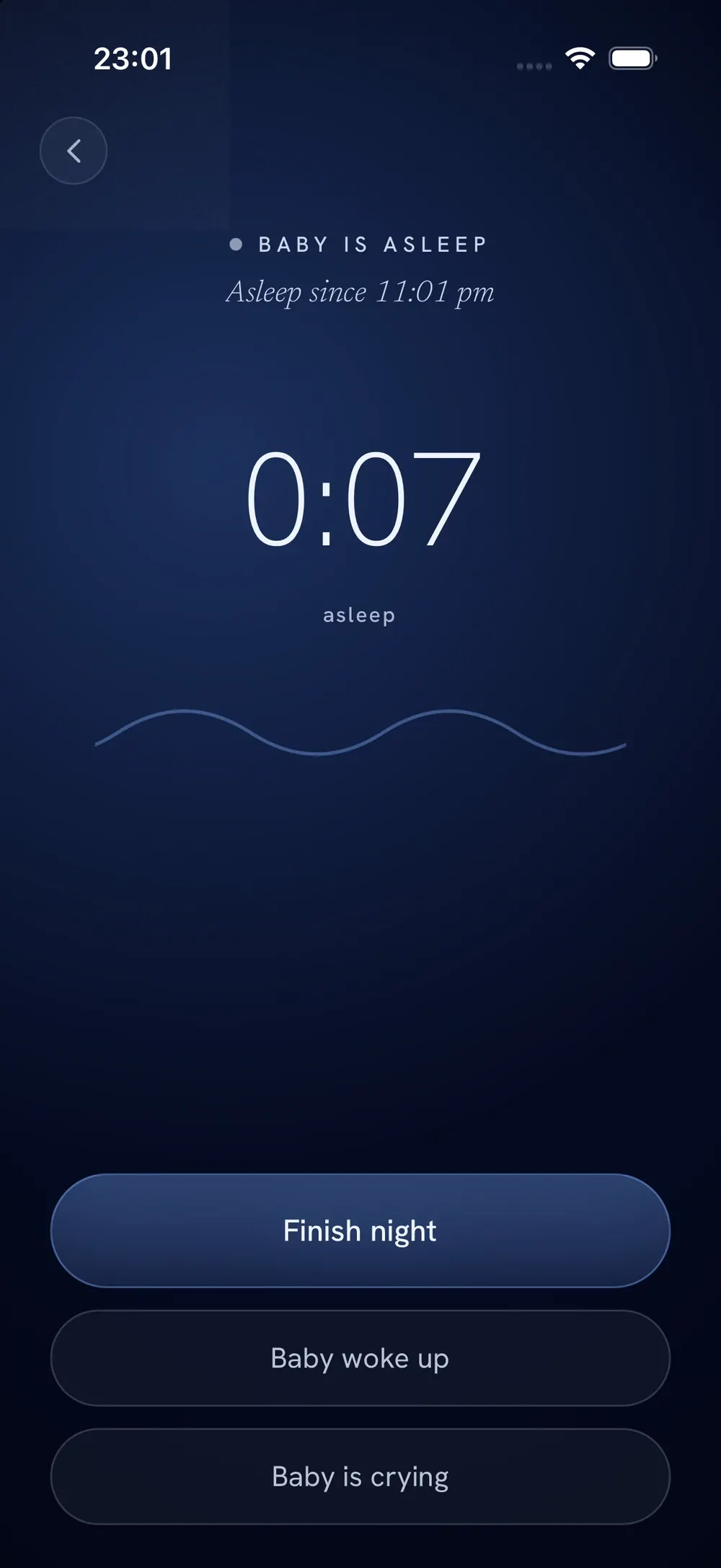
If you go on to try the Ferber method, the app runs every wait, alerts you when it is time to check in, and times each check-in (2 minutes by default).
Common questions
What does drowsy but awake mean?
Drowsy but awake means putting your baby into their crib when they are relaxed and sleepy but still awake, so they do the last part of falling asleep on their own. The American Academy of Pediatrics recommends putting babies to bed drowsy, without waiting until they are asleep, from about 4 months.
At what age should I start drowsy but awake?
The American Academy of Pediatrics recommends it from about 4 months. You can practice gently before then, but young babies often still need to be held to sleep, and that is fine. Formal sleep training methods such as Ferber usually start around 6 months, and if your baby is under 6 months you should talk to your pediatrician first.
What if my baby cries every time I put them down drowsy but awake?
Some fussing is normal while your baby learns. You can try putting them down a little sleepier, staying close with a hand on their chest, or picking them up to calm them and trying again. If it is still not working after a week or two, a structured method like the chair method or Ferber, from around 6 months, gives you a clearer plan.
Does drowsy but awake work for naps too?
Yes, the idea is the same at naps. Many families start with bedtime, when babies are often sleepiest, and bring naps in once bedtime is going well.
Sources
- American Academy of Pediatrics (HealthyChildren.org): Getting Your Baby to Sleep
- American Academy of Pediatrics (HealthyChildren.org): Self-Soothing: Helping Your Baby Learn This Life Skill
- Sleep Foundation: The Ferber Method
- NHS: Helping your baby to sleep
- American Academy of Pediatrics (HealthyChildren.org): A Parent's Guide to Safe Sleep