Safety and health
What to do if your baby vomits during Ferber
If your baby vomits during Ferber, go in, pick them up, clean up and comfort them. Here is when to stop, when to call the doctor and how to restart.
The crying changes pitch, then goes quiet, then you hear it: your baby has thrown up. You are halfway through a wait on the Ferber chart, and every instinct says go in. Follow that instinct.
If your baby vomits during the Ferber method, go in right away. Pick them up, make sure they are breathing comfortably, clean them and the crib, and comfort them. Then stop sleep training for the rest of the night. Vomiting can follow a long, hard cry, and it can also be the start of an illness, and at night you often cannot tell which. Call your pediatrician if your baby seems unwell, and restart the plan once they are clearly back to normal.
What to do in the first few minutes
- Go in now. Do not wait for the timer. A check-in schedule is for a healthy baby protesting, and a baby who has just vomited needs you.
- Pick your baby up and look at them. Are they breathing easily? Are they alert and responding to you? Is their color normal?
- Clean up with as little fuss as you can. Change their clothes and sleep sack, wipe their face and hands, and strip the crib sheet. Low light and a quiet voice help everyone stay calm.
- Comfort them. Hold them, rock them, offer a cuddle for as long as they need. The American Academy of Pediatrics (AAP) notes that you can attend to your baby, including comforting them if they are sick.
- Watch for a few minutes. Do they seem settled and like themselves, or hot, floppy, distressed or about to be sick again?
It helps to have a spare crib sheet, a spare sleep sack and a set of pajamas within reach before bedtime during a training week. Fumbling for clean bedding at midnight is no fun.
Crying or illness: why you cannot always tell
Some babies vomit after crying hard, especially soon after a feed. Vomiting can also be an early sign of a stomach bug or another infection. AboutKidsHealth, from The Hospital for Sick Children in Toronto, describes vomiting as a possible sign of infection, a reaction to something the baby ate, or another gastrointestinal problem.
The AAP draws a useful line between the two things parents often call “throwing up”:
- Spitting up is an easy flow of stomach contents out of the mouth, often with a burp.
- Vomiting is forceful throwing up of stomach contents.
A small spit-up during a cry is common and not usually a worry. Forceful vomiting deserves more attention, especially if it happens more than once.
Because the cause is so hard to judge in the dark, the safest default is the same either way: comfort your baby and stop the plan for tonight. You lose very little by pausing for one night, even if it turns out it was only the crying.
When to call your pediatrician
Some signs mean you should call straight away rather than wait until morning.
These signs come from the AAP’s guidance on infant vomiting and fever, and AboutKidsHealth’s guidance on vomiting in babies. The AAP also suggests calling if vomiting continues for more than 24 hours. If something feels wrong and you cannot say why, call anyway. Pediatricians would much rather hear from you.
For a fever without vomiting, the AAP advises calling if a fever lasts more than 24 hours in a child under 2, or if your baby still acts sick once the fever is down.
Putting your baby back down safely
Once your baby is clean, calm and seems well, put them back in their own crib on their back. Many parents worry about this after a vomit, but the AAP’s safe sleep guide says babies will not choke on their backs, because their airway anatomy and gag reflex protect them. Do not prop your baby up, tilt the mattress, or move them to their side or tummy.
The rest of the safe sleep basics still apply: a firm, flat surface, a fitted sheet, and no pillows, blankets, bumpers or soft toys. If you want to keep a closer eye on your baby, bring the crib or a bassinet into your room for the night rather than bringing your baby into your bed.
For the rest of tonight, comfort your baby back to sleep in whatever way works. Rocking or feeding to sleep for one night will not undo what you have built. The glossary entry on sleep associations explains why one night rarely matters, and why a pattern over many nights does.
Restarting Ferber after a vomiting episode
Wait until your baby is clearly well. That usually means no more vomiting, no fever, eating and drinking normally, and their usual mood during the day. If your baby was ill, your pediatrician can tell you when they are recovered.
Then pick a restart point:
- One-off episode, baby well the next day: many families resume the following night at the night they were on.
- A short illness of a few days: step back a night or two on the Ferber method chart.
- More than a week off: start fresh at Night 1.
Our article on restarting Ferber after your baby has been sick goes into this in more detail, and the guide to teething, illness and when to pause covers colds and vaccinations.
If your baby vomits more than once from crying
A few babies seem to vomit fairly reliably after a long cry, even when they are healthy. If that happens, talk to your pediatrician before you continue. They can check for things like reflux and help you decide whether to carry on, change approach or wait.
Some practical changes families sometimes try, after checking with their pediatrician:
- Move the last feed earlier in the bedtime routine, so there is more time between feeding and lying down.
- Try a gentler approach. Check-ins at shorter intervals, or a method with more parental presence, such as the chair method, may suit a baby who gets very worked up.
- Wait a few weeks and try again. Choosing not to sleep train right now is a perfectly good decision.
Whatever you decide, never leave a baby who has vomited to keep crying. Going in, cleaning up and comforting them is always the right call.
Before tonight
Put a spare crib sheet, sleep sack and pajamas next to the crib, and agree with your partner that vomiting means stopping for the night, no discussion needed. If it would help to talk through what is normal before you start, our article on whether the Ferber method is safe covers the research and the safety limits.
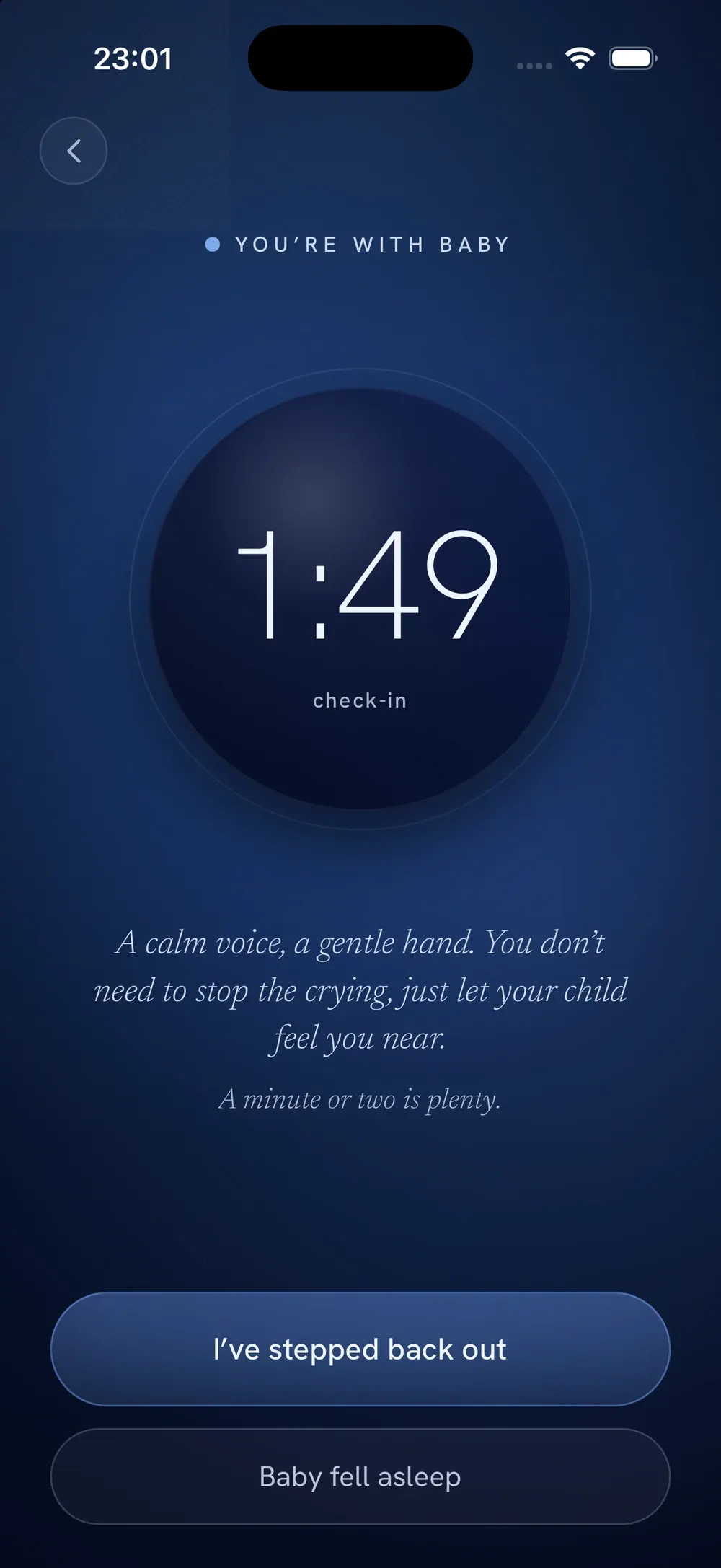
The Ferber app keeps a sleep history of every night you run and suggests the next night from that history, so when your baby is well again you can see where you left off.
Common questions
What should I do if my baby throws up during sleep training?
Go in straight away, pick your baby up, check they are breathing comfortably, then clean them and the crib and change their clothes. Comfort them and keep things calm. Stop sleep training for the rest of that night, and call your pediatrician if they seem unwell.
Can crying hard make a baby vomit?
It can happen, especially soon after a feed, but vomiting can also be the first sign of a stomach bug or another illness, and at night it is hard to tell which. Treat it as a reason to stop for the night and watch your baby closely.
Is it safe to put my baby back on their back after vomiting?
Yes. The American Academy of Pediatrics says babies will not choke on their backs, because their airway anatomy and gag reflex protect them. After cleaning up, lay your baby down on their back in their own crib, as usual.
When should I restart Ferber after my baby vomited?
Wait until your baby is clearly well: eating and drinking normally, no fever, no more vomiting, and their usual self during the day. If they were only off for a night, you can usually resume at the night you were on.
When should I call the doctor about vomiting?
Call your pediatrician right away if the vomit is green, bloody or looks like coffee grounds, if vomiting is forceful or repeated, if your baby seems very drowsy or very irritable, has a fever, or shows signs of dehydration such as a dry mouth, no tears or far fewer wet diapers.
Sources
- American Academy of Pediatrics (HealthyChildren.org): Infant Vomiting
- AboutKidsHealth (The Hospital for Sick Children): Spitting up and vomiting in babies
- American Academy of Pediatrics (HealthyChildren.org): When to Call the Pediatrician: Fever
- American Academy of Pediatrics (HealthyChildren.org): A Parent's Guide to Safe Sleep
- American Academy of Pediatrics (HealthyChildren.org): Getting Your Baby to Sleep