Setbacks and regressions
Restarting Ferber after your baby has been sick
Restart Ferber once your baby is well: no fever, eating normally, back to their usual self. Here is how to choose where to restart on the chart.
Your baby is finally better. The fever has gone, they are eating again and the smiles are back. You have also spent the last few nights rocking, holding and feeding them to sleep, and now you are not sure how to get back to where you were.
Restart Ferber once your baby is clearly well: no fever, eating and drinking normally, and back to their usual mood during the day. If the pause was a night or two, many families resume at the night they were on. After several days off, step back a night or two on the chart. After more than a week, start again at Night 1. If you are not sure your baby has recovered, ask your pediatrician before you begin.
While your baby is sick: comfort comes first
Sleep training is for a healthy baby learning a new way to fall asleep. A sick baby needs comfort, and you should give it freely. The American Academy of Pediatrics (AAP) says you can attend to your baby at night, including comforting them if they are sick. The NHS notes that illness can affect how a baby sleeps, so rough nights during a cold or a fever are expected.
During the illness:
- Pause the chart completely. Go to your baby when they cry. Hold them, rock them, feed them if they want it.
- Follow your pediatrician’s advice on fever, fluids and any medicine.
- Keep the bedtime routine if you can. Familiar steps help once your baby is well again.
- Keep the sleep space safe. It is tempting to bring a sick baby into your bed, but the AAP recommends room sharing without bed sharing. If you want to keep a close eye on your baby, move their crib or bassinet into your room. Place them on their back, on a firm, flat surface, with no pillows, blankets or soft toys. The AAP’s safe sleep guide has the full guidance. Do not prop or tilt the mattress, even for a stuffy nose.
How to tell your baby is ready to restart
There is no fixed number of days. Look at your baby, not the calendar. Signs that your baby is ready:
- No fever, and no fever-reducing medicine needed, for about a day
- Eating and drinking as normal
- Back to their usual mood and energy during the day
- Sleeping without obvious discomfort, such as a cough that wakes them or ear pain
Some symptoms take longer to fade than the illness itself. Seattle Children’s Hospital says a typical cold lasts about 2 weeks, with fever lasting 2 to 3 days, a runny nose 7 to 14 days and a cough 2 to 3 weeks. So you may be ready to restart while your baby still has a runny nose or a light cough. What matters is whether those symptoms are disturbing their sleep or making them uncomfortable.
If a cough or a stuffy nose is clearly what wakes your baby, wait a little longer. If you are unsure, or you have any concern about breathing, ask your pediatrician. The guide to teething, illness and when to pause also covers colds without a fever and vaccinations.
Choosing where to restart on the chart
A simple rule of thumb many families use:
- Paused for one or two nights: resume at the night you were on. If you stopped on Night 4, run Night 4.
- Paused for three to seven nights: step back a night or two. A baby who stopped on Night 5 might restart at Night 3.
- Paused for more than a week, or the illness came on in the first couple of nights: start again at Night 1.
| Night | 1st wait | 2nd wait | 3rd wait, then every wait |
|---|---|---|---|
| Night 1 | 3 min | 5 min | 10 min |
| Night 2 | 5 min | 10 min | 12 min |
| Night 3 | 10 min | 12 min | 15 min |
| Night 4 | 12 min | 15 min | 17 min |
| Night 5 | 15 min | 17 min | 20 min |
| Night 6 | 17 min | 20 min | 25 min |
| Night 7 | 20 min | 25 min | 30 min |
Waits are in minutes. After the third wait, keep repeating the third value until your baby is asleep. If your baby wakes later in the night, start again from that night's first wait.
If you finished the full week before your baby got sick and sleep was going well, you may not need the chart at all. Try your usual routine and see what happens. If crying returns at bedtime, run a short re-arc: start at a night that matches how your baby is doing now and move up one night at a time. The Ferber method chart explains how the waits work, including how they restart after a night waking.
Stepping back a night is a normal part of restarting. A slightly gentler first night often helps your baby find their feet again, and many families find a second run goes faster than the first.
The first night back
Expect some protest. Your baby has spent several nights being held to sleep, and that felt good. Crying may be louder or longer for the first night or two, the same way it often is early in the first week. Our article on why Night 3 can be worse explains why crying often rises before it falls.
A few things make the first night back easier:
- Pick a calm evening. Avoid restarting on a night with visitors, a late return from a trip or a missed nap.
- Run the full routine. Same steps, same order, same length as before the illness.
- Agree on the plan with your partner before bedtime, so nobody is deciding at 2 a.m. The guide to co-parenting and consistency has ideas.
- Keep check-ins short. A few quiet words, perhaps a pat, then out.
- Watch for signs the illness is back. A new fever, vomiting or crying that sounds like pain means stop and comfort.
Night feeds after an illness
Sick babies often feed more at night, and it can be hard to know afterward whether a night feed is still needed. If your baby had dropped night feeds before they got sick and now wakes asking for one, check with your pediatrician, especially if they lost their appetite or any weight while ill. If your pediatrician wants a feed kept for now, keep it on a clear rule and use the chart for other wakings.
If sleep does not settle after a restart
Give it a few consistent nights. If things are not improving, run through the checks in our article on why the Ferber method is not working. If sleep stays disrupted for weeks after an illness, or your baby snores, breathes noisily, pulls at their ears or seems unwell, talk to your pediatrician, who can check for things like an ear infection.
It is also fine to wait. If you are exhausted from nursing a sick baby, taking a week to recover before you restart is a sensible choice.
One thing to do tonight
Look back at the last night your baby slept well before they got sick, and count how many nights it has been. Use the rule of thumb above to choose your restart night, and write it down for whoever is doing bedtime.
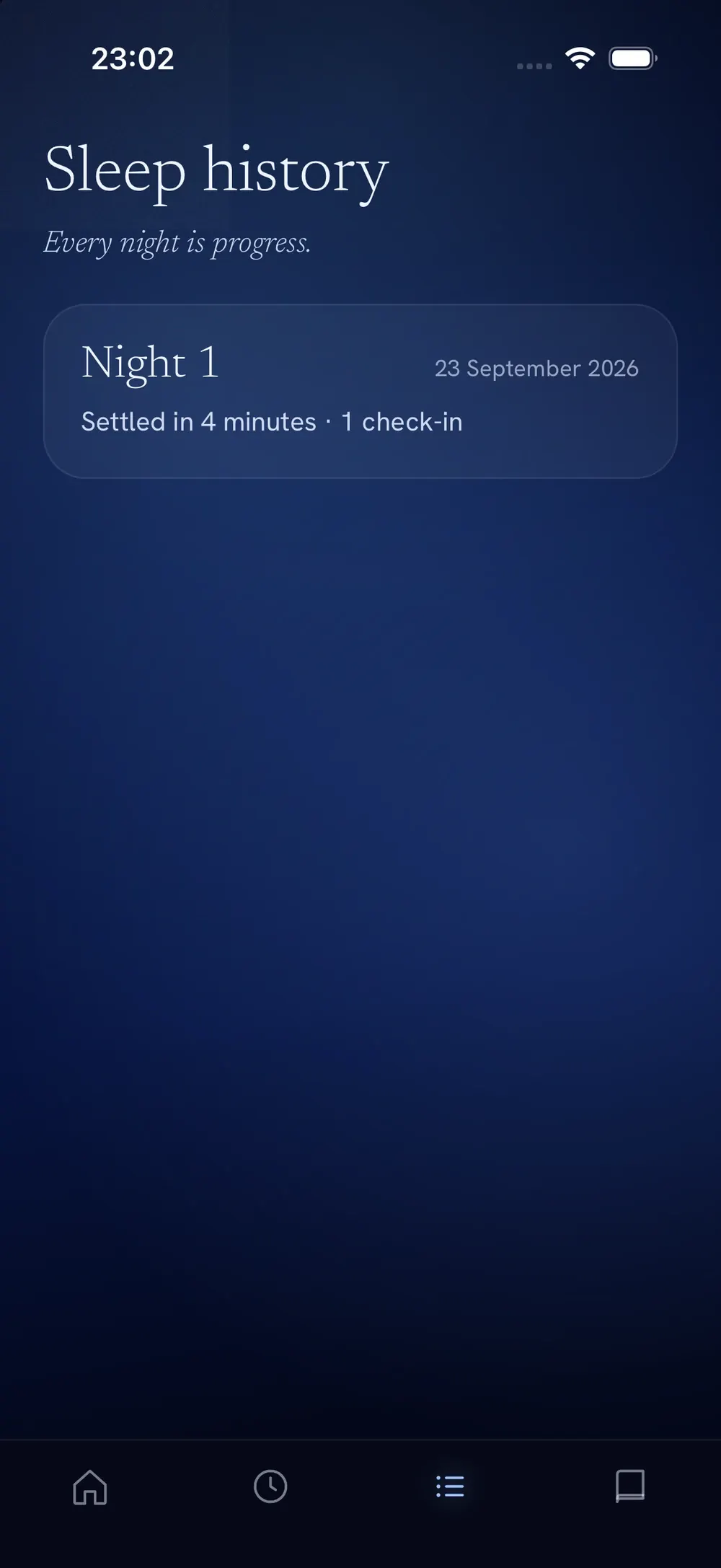
The Ferber app keeps a sleep history of every night you run and suggests the next night from that history, so you can see exactly where you stopped before choosing where to start again.
Common questions
When can I restart Ferber after my baby has been sick?
Once your baby is clearly well: no fever, eating and drinking normally, sleeping without discomfort and back to their usual mood during the day. Many families wait a day or so after the fever has gone. If you are unsure whether your baby has recovered, ask your pediatrician.
Do I have to start Ferber from Night 1 after an illness?
Not always. After a pause of a night or two, many families resume at the night they were on. After a pause of several days, stepping back a night or two on the chart is common. After more than a week, starting again at Night 1 is reasonable, and a second run is often quicker.
My baby still has a cough. Can I restart Ferber?
A leftover cough can linger for a while after a cold. If your baby has no fever, is eating normally and the cough is not what is waking them, many families restart. If the cough wakes your baby, they seem uncomfortable, or you have any concern about their breathing, wait and talk to your pediatrician.
Will comforting my sick baby undo sleep training?
Comforting a sick baby is the right thing to do, and it rarely erases what your baby has learned. Expect a little more protest on the first night or two back, then things usually settle again with a consistent response.
Sources
- American Academy of Pediatrics (HealthyChildren.org): When to Call the Pediatrician: Fever
- Seattle Children's Hospital: Colds
- American Academy of Pediatrics (HealthyChildren.org): Getting Your Baby to Sleep
- NHS: Helping your baby to sleep
- American Academy of Pediatrics (HealthyChildren.org): A Parent's Guide to Safe Sleep