Setbacks and regressions
Why Night 2 or 3 of Ferber can be worse than Night 1
A harder Night 2 or 3 is common and usually short. Why it happens, how to tell it from illness, teething or overtiredness, and what to keep the same.
Night 1 was hard, but it ended, and you told yourself the worst was over. Now it is Night 2 or 3, the waits are longer, and your baby is crying harder than on the first night. It feels like the whole thing is going backwards.
It usually is not. A worse Night 2 or 3 of the Ferber method is common and usually short-lived. When a response that always worked (rocking, feeding, being held) stops arriving, crying often gets louder or longer for a while before it drops. Behavioral researchers call this an extinction burst, and it is not a sign the method has failed. But a harder night can also mean illness, teething pain or an overtired baby, and those need a different response. Here is how to tell the difference, and what to keep the same.
Why Ferber Night 3 can be worse than Night 1
There are usually three things happening at once.
The extinction burst. In behavioral terms, “extinction” means no longer giving the response that has kept a habit going. When that happens, the behavior often increases for a while before it fades. Researchers who study children’s bedtime problems list the extinction burst among the well-known side effects of extinction-based sleep approaches (Kuhn et al., 2020). The Ferber method softens this with timed check-ins, but the same learning process is at work. Your baby is not getting worse. They are testing whether the old way still works.
Longer waits. The chart steps up every night. On Night 1 the longest wait is 10 minutes. On Night 3 it is 15.
| Night | 1st wait | 2nd wait | 3rd wait, then every wait |
|---|---|---|---|
| Night 3 | 10 min | 12 min | 15 min |
Waits are in minutes. After the third wait, keep repeating the third value until your baby is asleep. If your baby wakes later in the night, start again from that night's first wait.
So even if your baby cries exactly as much as on Night 1, you spend longer listening before each check-in. That alone can make Night 3 feel worse. The full week is on the Ferber method chart.
Your own tiredness. By Night 3 you have had two short, stressful nights. Crying is harder to listen to when you are exhausted, and minutes feel longer. None of this means you are doing it wrong.
What an extinction burst tends to look like
Every baby is different, but a protest-driven hard night often has a recognizable shape:
- crying is louder or longer than on Night 1, sometimes with new sounds
- it rises and falls, with pauses, then picks up again, often right as you leave a check-in
- it eases, at least briefly, when you come in
- your baby eventually falls asleep
- in the daytime your baby is their usual self: feeding normally, playing, no fever
That last point matters most. An extinction burst is about the bedtime routine changing. It does not come with signs of being unwell during the day.
When it is not an extinction burst: illness, teething and overtiredness
Look at the whole baby, not just the crying.
Illness. Stop the plan and comfort your baby if they have a fever, have vomited, seem to be in pain, or have a cough or congestion that is keeping them awake. The American Academy of Pediatrics advises calling your pediatrician right away if a baby with a fever looks very ill, is unusually drowsy or very fussy, has trouble breathing, or has repeated vomiting or diarrhea. It also advises calling if a fever lasts more than 24 hours in a child under 2.
Teething. The NHS lists common teething signs: a sore, red gum where the tooth is coming through, a flushed cheek, rubbing an ear, dribbling more than usual, chewing on things, being more fretful than usual and not sleeping very well. It also notes a baby’s temperature may be slightly raised but below 38°C (100.4°F). A temperature at or above that is not something to put down to teething. If your baby seems uncomfortable, comfort them, ask your pediatrician about pain relief, and pause the plan until they are more comfortable. Our guide to teething and illness has more on pausing.
Overtiredness. A skipped nap, a busy day or a bedtime that drifted later can make any night harder, with or without sleep training. This does not usually call for stopping. Run the plan as normal tonight, and aim for a steadier day tomorrow.
A cry that sounds different. You know your baby. If the crying sounds like pain, is high-pitched in a way you have not heard before, or simply feels wrong, go in.
What to keep the same
If your baby is well and this looks like protest, the most helpful thing is for tonight to look exactly like the last two nights. When a harder night gets a bigger response, like a pickup after 40 minutes of crying, the lesson your baby learns is that crying longer brings the old help back. That can make the following nights harder.
Keep these the same:
- The routine. Same steps, same order, roughly the same time.
- The waits. Use tonight’s intervals from the chart. Do not shrink them because the crying is louder, and do not skip ahead because you want it over. If the chart feels too long for your family, it is fine to choose gentler waits, but decide before bedtime and use them every time.
- The check-in. The Sleep Foundation advises keeping check-ins short, under one to two minutes. You can pat your baby’s back or speak softly, but do not pick them up or feed them. The glossary has a short definition.
- Night wakings. When your baby wakes and cries, start again from that night’s first wait.
- The adults. If two of you are sharing the night, use the same words, the same length of check-in and the same waits.
- Safe sleep. Your baby stays on their back, on a firm, flat surface in their own crib, with no pillows, bumpers, blankets or soft toys. The AAP’s safe sleep guide has the details.
A night feed your pediatrician has asked you to keep is not a slip. Keep it, and use the chart for the other wakings.
When to change course
If your baby gets sick, pause. When they are well, many families restart at an earlier night on the chart rather than where they left off.
If it keeps getting worse, not better, give it a fair run first. Many families see change around Nights 4 to 7; our article on how long the Ferber method takes covers what to expect. If you have been consistent for about a week and nothing has improved, talk to your pediatrician. Mention snoring, pauses in breathing, reflux or feeding worries whenever you notice them.
If the crying comes back weeks later, that can be normal too. The Sleep Foundation notes that children can have “post-extinction bursts,” suddenly returning to behavior that seemed gone. Respond the same way you did during the week.
If you cannot keep going, that is allowed. A slower approach like the chair method involves less crying alone and may be easier to stick with. If you are feeling low or overwhelmed, please talk to your doctor. The page on parent anxiety may also help.
For tonight
Before bedtime, think back over the day: feeding, playing, temperature, anything unusual. If they are well, write down tonight’s waits, agree on the check-in with anyone helping, and decide that tonight will look like last night.
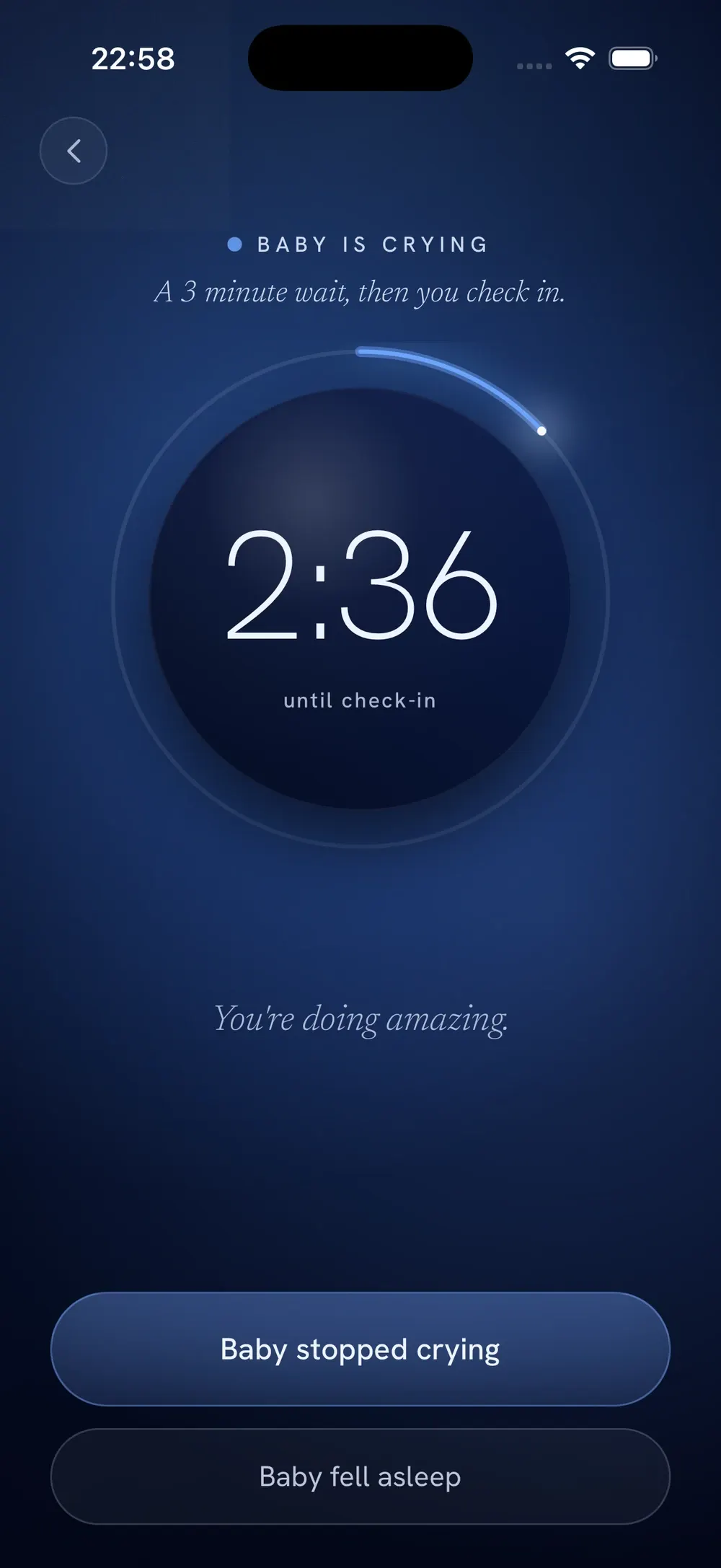
The Ferber app does the counting for you. It runs each wait, alerts you when it is time to check in, times the check-in, and keeps a history, so on a hard Night 3 you can see how Night 1 really went.
Common questions
Why is my baby crying more on Night 3 of Ferber?
Often because a response that always came, like rocking or feeding, has stopped coming, and crying gets stronger for a short time before it fades. This is called an extinction burst. The waits are also longer on Night 3, so the same crying can feel like more.
Does a worse Night 3 mean the Ferber method is not working?
Not on its own. A harder night early in the week is common and usually temporary. Many families see change around Nights 4 to 7. If nothing has improved after about a week of consistent nights, talk to your pediatrician.
How do I know if it is teething or illness rather than protest?
Look at the whole baby, not just the crying. A fever, vomiting, trouble breathing, unusual drowsiness, a cry that sounds like pain, or a baby who is off their food or not themselves in the day all point to something other than protest. In those cases, stop, comfort your baby and call your pediatrician if you are worried.
Should I shorten the waits on a bad night?
It is better not to change the plan mid-night. Shrinking the waits or adding a pickup when crying is loudest can teach your baby that longer crying brings more help. If the chart feels too long for your family, choose gentler waits before the night starts and use them every time.
Sources
- Kuhn BR et al. Promoting independent sleep onset in young children: examination of the Excuse Me Drill. Behavioral Sleep Medicine, 2020
- Sleep Foundation: The Ferber Method
- NHS: Baby teething symptoms
- American Academy of Pediatrics (HealthyChildren.org): When to Call the Pediatrician: Fever
- American Academy of Pediatrics (HealthyChildren.org): A Parent's Guide to Safe Sleep