Naps and schedules
The Ferber method for naps: how it works and why it takes longer
You can use the Ferber method for naps with the same timed check-ins as at night, but naps often take longer to improve. Here is how to do it.
Bedtime is finally getting easier. Then 1 p.m. comes around, you lay your baby down for a nap, and the crying starts all over again. It is a fair question whether the same approach belongs in the middle of the day.
Yes, you can use the Ferber method for naps. The Sleep Foundation notes that the same principles apply: put your baby in the crib awake and use timed intervals for check-ins if they cry. The honest catch is that naps often take longer to improve than night sleep, so a slower start at nap time does not mean the method has failed.
Does the Ferber method work for naps?
The Ferber method is a form of graduated extinction: you put your baby down awake, leave, and return for short check-ins after waits that get gradually longer. A large review of behavioral sleep treatments for infants and young children found support for graduated extinction for bedtime problems and night wakings (Mindell et al., 2006). That research focused on bedtime and the night, not specifically on naps.
For naps, the Sleep Foundation describes the same approach as at night, with one caution: naps can take longer to improve than nighttime sleep, so patience and consistency matter. Part of the reason may simply be practical: during the day the room is often brighter, the house is louder, and there is more going on. Your baby is being asked to learn the same skill with fewer things working in their favor.
If you want the full picture of how the method works at night, start with the Ferber method, explained or the method overview.
Nights first, or naps too?
There is no single right order. Many families start with bedtime and night wakings and bring the same approach to naps once nights are settling. Others start both on the same day so their baby gets one consistent message.
Some things to weigh:
- Your energy. A week of Ferber nights is tiring. Adding two or three nap sessions a day can be a lot for one parent. Starting with nights is a reasonable choice if you need the daytime to recover.
- Consistency. If you rock your baby to sleep for every nap while using Ferber at night, some babies will take longer to settle at bedtime, because the old way still works part of the time. The Sleep Foundation notes that a single lapse in consistency may reinforce a child’s reliance on a caregiver being there to fall asleep.
- Who handles naps. If a grandparent, nanny or daycare handles daytime sleep, they may not use the same approach. That is normal. Our guide to daycare and routine changes covers how families plan around it.
Whatever you choose, say it out loud with your partner or other caregivers before you begin.
How to do the Ferber method at nap time
The steps mirror bedtime.
- Keep a short, predictable nap routine. A few minutes is plenty: a diaper change, a sleep sack, a song, curtains closed. A shortened version of your bedtime routine works well.
- Put your baby down awake. The American Academy of Pediatrics suggests putting babies to bed drowsy but awake from around 4 months, so they learn to fall asleep on their own.
- Leave, and time the wait. If your baby cries, wait the first interval before going in.
- Keep check-ins brief and calm. A minute or two of reassurance, then leave again. What you say and do during a check-in is covered in detail in what to do during a Ferber check-in.
- Wait a little longer each time. Use gradually increasing waits, just as at night.
Which intervals? The Ferber method chart is written for nights. A simple approach for naps is to use the intervals from the night you are on, so everyone works from one set of numbers. The Sleep Foundation also notes that intervals can be adjusted to fit caregivers’ needs, so shorter waits at naps are fine if the waits still grow and every adult uses the same ones.
| Night | 1st wait | 2nd wait | 3rd wait, then every wait |
|---|---|---|---|
| Night 1 | 3 min | 5 min | 10 min |
| Night 2 | 5 min | 10 min | 12 min |
| Night 3 | 10 min | 12 min | 15 min |
| Night 4 | 12 min | 15 min | 17 min |
| Night 5 | 15 min | 17 min | 20 min |
| Night 6 | 17 min | 20 min | 25 min |
| Night 7 | 20 min | 25 min | 30 min |
Waits are in minutes. After the third wait, keep repeating the third value until your baby is asleep. If your baby wakes later in the night, start again from that night's first wait.
When a nap attempt is not working
This is where naps differ most from nights. At night, the end point is sleep, because it is night. At nap time there is a clock running: a baby who cries for most of the nap window may be overtired by the next one.
There is no single nap cutoff we can point you to, so treat this as a family decision. Some families choose a set limit for each nap attempt. If their baby has not fallen asleep by then, they get them up, carry on with the day, and try again at the next nap or at bedtime. The key is to pick a limit you can repeat, and not to let the rescue turn into rocking or feeding to sleep, which sends a mixed message.
Short naps are another common pattern. A baby who wakes crying after a short nap can be treated like a night waking: wait, check in briefly, and see if they resettle. If the nap does not resume, get them up and move on.
Keep an eye on total sleep across the day rather than any one nap. The American Academy of Sleep Medicine recommends 12 to 16 hours per 24 hours, including naps, for babies 4 to 12 months (Paruthi et al., 2016). Babies vary within that range, and your pediatrician can tell you if your baby’s sleep looks off for their age.
Safe sleep applies to every nap
The same age and health rules also apply. Sleep training is not for babies under about 4 months, and 6 months is a common starting point; if your baby is younger than 6 months, talk to your pediatrician first. If your baby is sick, in pain or feeding poorly, pause and call your pediatrician. Nothing about the method asks you to leave a sick baby to cry.
A next step for tomorrow’s first nap
Pick one nap to start with, perhaps the first of the day. Write down your routine, your intervals and your limit for the attempt, and tell anyone else who might handle it. Then give it several days before judging it. As with nights, results vary from baby to baby, and there is more on realistic timelines in how long the Ferber method takes.
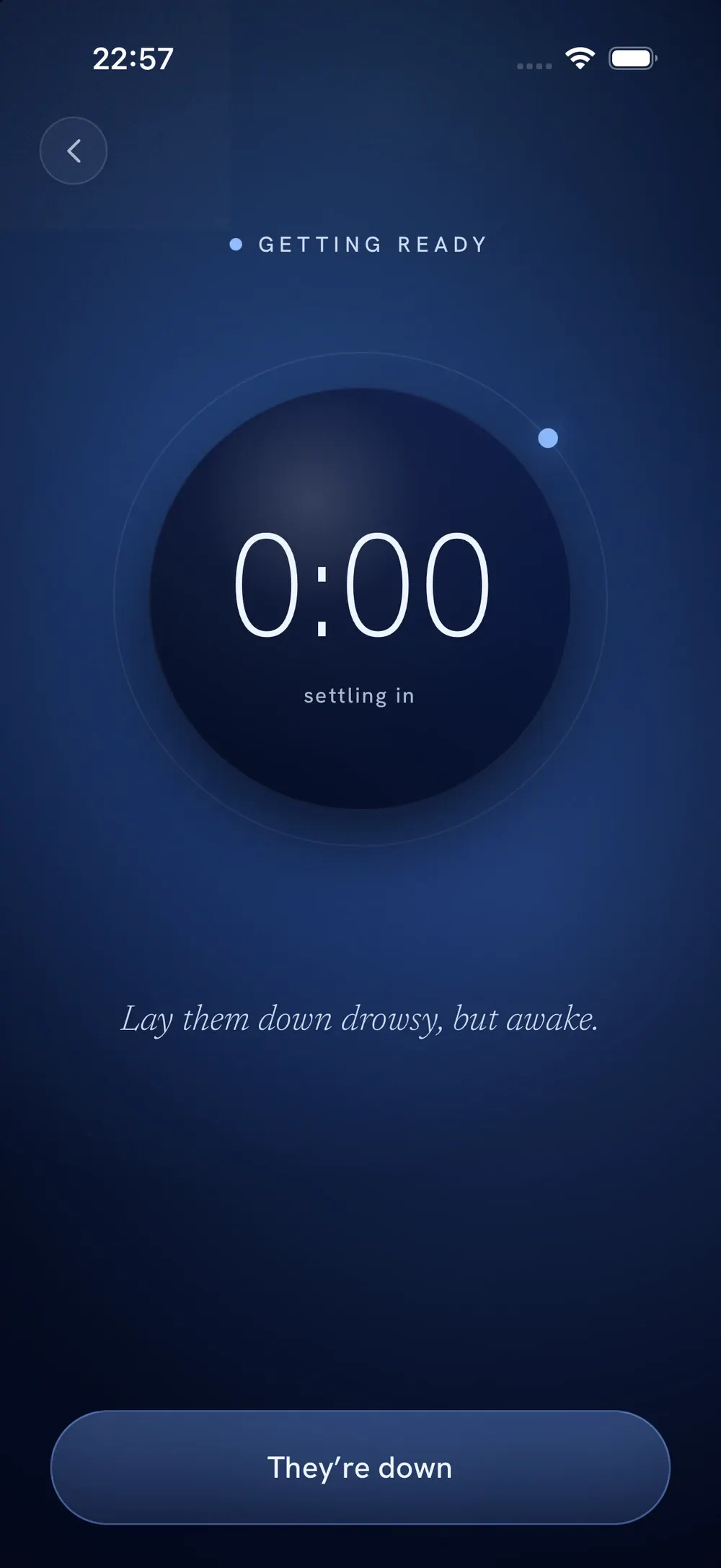
The Ferber app is built around nights: it runs each wait, alerts you when it is time to check in, times the check-in and keeps a sleep history, which can help you settle bedtime and night wakings before you take on naps.
Common questions
Can you use the Ferber method for naps?
Yes. The same principles apply: put your baby down awake in their crib and use timed, gradually longer waits before brief check-ins if they cry. Naps often take longer to improve than night sleep, so expect a slower start.
Should I start Ferber with naps or nights?
Many families start with bedtime and night wakings, then bring the same approach to naps once nights are settling. Others do both from the start. Either can work if every adult handles sleep the same way.
How long should I let a nap attempt go on?
There is no single rule. Some families choose a set limit for a nap attempt, and if their baby has not fallen asleep by then, they get them up and try again at the next nap. Pick a limit you can repeat every day.
Can my baby nap in the car seat or swing during Ferber?
The American Academy of Pediatrics advises moving a baby who falls asleep in a car seat or swing to a firm, flat sleep surface as soon as possible. Safe sleep rules are the same for naps as for nights.
Sources
- Sleep Foundation: The Ferber Method
- American Academy of Pediatrics (HealthyChildren.org): A Parent's Guide to Safe Sleep
- American Academy of Pediatrics (HealthyChildren.org): Getting Your Baby to Sleep
- Paruthi S et al. Recommended amount of sleep for pediatric populations: AASM consensus statement. J Clin Sleep Med, 2016
- Mindell JA et al. Behavioral treatment of bedtime problems and night wakings in infants and young children. Sleep, 2006