Safety and health
When can your baby sleep with a lovey or a blanket?
The AAP says to keep loveys, blankets and soft toys out of the crib for the first year. Here is what that means for bedtime and for sleep training.
Someone gave you a small, soft square with a bunny’s head on it, and your baby loves it. You are about to start sleep training, the crib looks very bare, and it feels like that bunny might make the nights easier.
The short answer to when a baby can sleep with a lovey: after the first birthday. The American Academy of Pediatrics (AAP) says to keep soft objects and loose bedding out of a baby’s sleep area, and it names blankets and toys. Its safe sleep recommendations apply to babies up to 1 year of age. Until then, the lovey can be part of bedtime and stay outside the crib. That goes for blankets too.
When can a baby sleep with a lovey? What the AAP says
The AAP’s safe sleep guide is direct about the crib: use a fitted sheet only, and nothing else should be in there with your baby. It lists what to keep out of the sleep area, including pillows and pillow-like toys, quilts, comforters, blankets, toys and bumper pads, and it gives the reason. Soft objects and loose bedding can increase a baby’s risk of entrapment, suffocation or strangulation.
The same page says that, unless it mentions otherwise, all of these recommendations are for babies up to 1 year of age.
Another AAP page, on baby products to avoid, puts it in plainer terms. It says hundreds of strangulation and suffocation deaths have been linked to loose items like blankets, pillows and stuffed animals in sleep spaces. Its advice is to feel free to decorate the room with stuffed animals and cuddly blankets, and to keep them out of the crib or bassinet.
That is a hard thing to read when you are holding a gift from a grandparent. It is also a simple rule to follow, and it has an end date.
Why a small, breathable lovey still counts
Many loveys are sold as tiny, light or breathable, and it is reasonable to wonder whether those are different. The guidance does not make an exception for them.
The NIH’s Safe to Sleep campaign says to keep soft objects, toys and other items out of the sleep area. Its list of things that can pose dangers includes items that are non-fitted, “even if lightweight, small, or tucked in,” and it names loveys and cloths as examples, next to tucked-in blankets.
Being able to roll does not change the rule either. The AAP says that once a baby is comfortable rolling both ways you do not need to keep turning them onto their back, and in the same breath it says to be sure there are no blankets, pillows, stuffed toys or bumper pads in the bed, because a baby could roll into them. (More on that in our article on babies who roll onto their stomach during sleep training.)
The Sleep Foundation notes that sudden infant death syndrome is most common between birth and six months, and that deaths can still occur up to 12 months. That fits with guidance that runs through the whole first year and does not stop when a baby starts to look sturdy.
How to use a lovey before the first birthday
The AAP is warm about comfort objects in general. Its page on transitional objects says a child will probably choose one, often a blanket or a soft toy, between eight and twelve months. It says these objects help a tired child sleep and reassure a child who is apart from a parent, that they are not a sign of weakness or insecurity, and that you may want to help your child choose one and build it into the nighttime ritual.
So one AAP page says a lovey can help, and another says nothing soft belongs in the crib before age 1. Our reading of the two together: before the first birthday, the lovey belongs to the routine and to the daytime, and it leaves before your baby goes into the crib. In practice that can look like this.
- Your baby holds the lovey during the book or the song.
- You say goodnight to it together and put it on a shelf, the same spot every night.
- It comes along for awake times when you can see your baby: the stroller, the play mat, a cuddle on the couch.
- At daycare or with a sitter, the same rule applies. Ask where it goes at nap time.
This way your baby still gets attached to it, and it is ready for the crib when the time comes. The AAP also suggests having two identical ones so you can wash one while the other is in use, and starting to rotate them early so the spare does not feel new.
If the worry is warmth and not comfort, the AAP’s answer is layers of clothing or a wearable blanket, with about one layer more than you are wearing. Our article on sleep sacks and the Ferber method covers that.
Does your baby need a lovey for sleep training?
No. A baby between 6 and 12 months can learn to fall asleep in an empty crib, and that is fine. (Sleep training is not for babies under about 4 months, and 6 months is the common starting point. If your baby is younger than 6 months, talk to your pediatrician first.) The Ferber method works by changing what happens at the moment of falling asleep: your baby goes down awake, and you check in at set times, so that over several nights many babies get used to settling without being rocked or fed to sleep. Nothing in that depends on an object. Our piece on sleep associations explains the idea, and when babies learn to self-soothe covers how that ability builds over the first year.
A pacifier is the one thing the AAP is comfortable with at sleep time. It suggests offering one at naps and bedtime. It should be on its own, though. Safe to Sleep says not to attach a pacifier to clothing, stuffed toys, blankets or other items, which would include the pacifiers that come attached to a small plush animal. If you use one, the Ferber method with a pacifier has the details.
One more thing that helps on hard nights: do not hand over the lovey as a way to end a long cry. It is not safe to leave it there, so you would only have to take it away again.
After 12 months: bringing the lovey into the crib
The AAP’s safe sleep recommendations are written for babies up to 1 year of age, so after the first birthday a lovey at bedtime becomes a reasonable thing to try. The sources we read for this article do not set out rules for what kind of lovey to choose after that, so the following is our own cautious suggestion and not official guidance.
- Start with one small, light comfort object, not a pile of them.
- Avoid anything with ribbons, strings, buttons or parts that could come off.
- Keep pillows and heavy blankets out for now, and keep weighted items out altogether.
- Ask your pediatrician first if your child was born early or you have any doubt about the timing.
If your toddler already has a favorite from the bedtime routine, the move is easy: the lovey that used to go on the shelf now goes into the crib with them. Some toddlers take to it right away and some ignore it, and both are fine.
If you are sleep training after the first birthday, a lovey can be part of the plan from Night 1. Hand it over at the end of the routine, before you leave, so it is something your child has from the start and not something that arrives when they cry. The 12 to 18 months page and the Ferber method at 12 months cover what else changes at this age.
One thing to do tonight
Pick the lovey’s spot outside the crib, a shelf or the top of the dresser, and make “goodnight, bunny” the last step of the routine before you lay your baby down. Then look over the crib once: fitted sheet, baby, and nothing else. If you are getting ready for a first night, the Night 1 checklist has the rest.
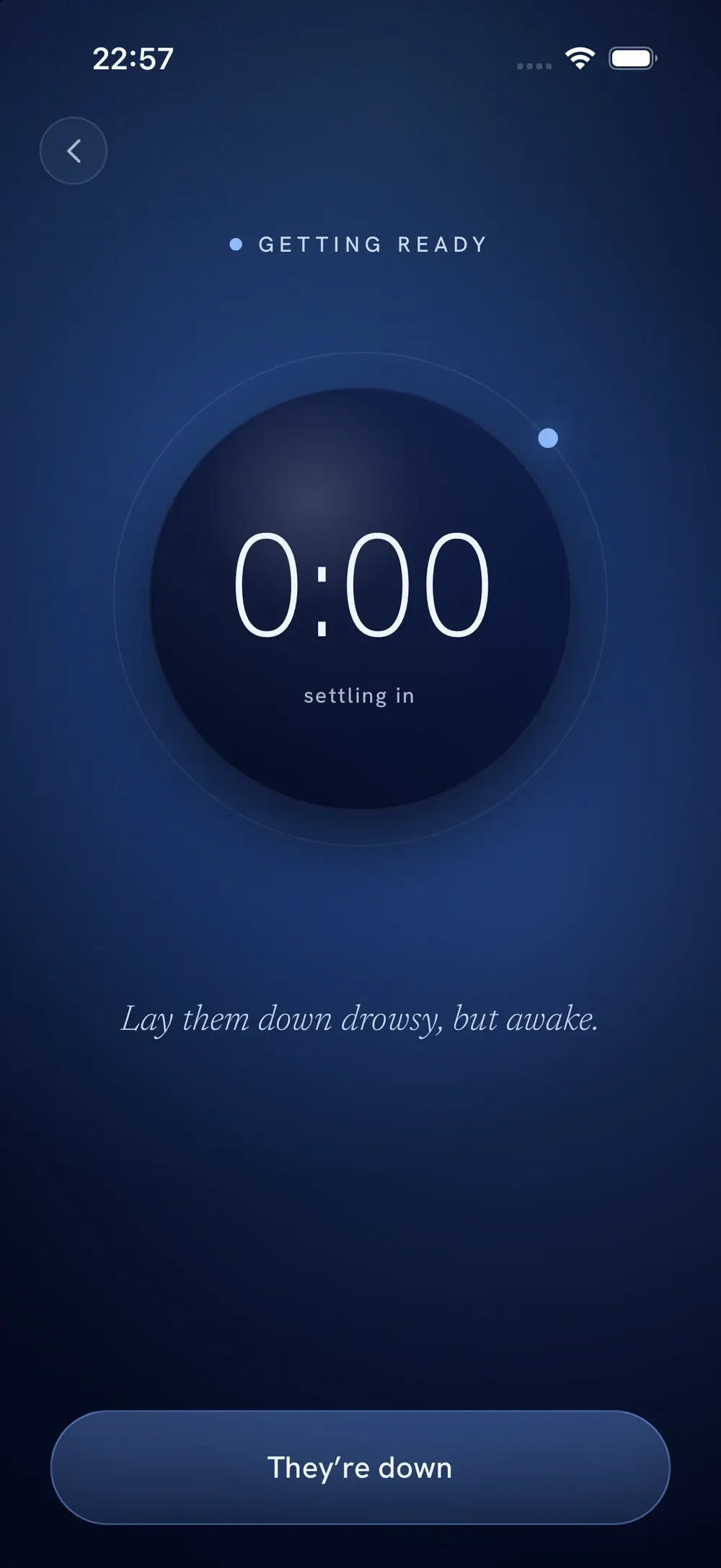
When you do start, the Ferber app runs each wait, tells you when it is time for a check-in, and keeps a history of each night. Night 1 is free.
Common questions
When can a baby sleep with a lovey?
After the first birthday. The American Academy of Pediatrics says to keep soft objects and loose bedding, including blankets and toys, out of a baby's sleep area, and its safe sleep recommendations apply to babies up to 1 year of age. Before then, a lovey can be part of the bedtime routine and stay outside the crib.
Is a small or breathable lovey safe in the crib before 12 months?
No size or fabric is treated as an exception. The NIH Safe to Sleep campaign lists loveys and cloths by name among the things to keep out of the sleep area, and says this applies even when an item is lightweight, small or tucked in.
When can a baby sleep with a blanket?
The American Academy of Pediatrics advises against loose blankets in the sleep area through the first year. If you are worried about your baby being cold, it suggests layers of clothing or a wearable blanket, with about one layer more than you are wearing.
Does my baby need a lovey for the Ferber method?
No. The Ferber method does not depend on a comfort object, and babies under 12 months should not have one in the crib. A baby learns to fall asleep in the crib with a fitted sheet and nothing else.
Can I attach a pacifier to a stuffed toy for sleep?
Not for sleep. A pacifier on its own is fine at naps and bedtime. Safe to Sleep says not to attach a pacifier to clothing, stuffed toys, blankets or other items, because of the risk of strangulation, choking and suffocation.
Sources
- American Academy of Pediatrics (HealthyChildren.org): How to Keep Your Sleeping Baby Safe: AAP Policy Explained
- NICHD Safe to Sleep: Ways to Reduce Baby's Risk
- American Academy of Pediatrics (HealthyChildren.org): Transitional Objects: Security Blankets and Beyond
- American Academy of Pediatrics (HealthyChildren.org): Inclined Sleepers, Soft Nursing Pillows and Other Baby Products to Avoid
- Sleep Foundation: When Can a Baby Sleep With a Blanket?